Finding a Cricket ID Provider in India requires more than checking a website, social media profile, or recommendation. Before trusting any provider, you should verify its website, business identity, contact details, policies, payment practices, and reputation. You should also check the current legal position in India before considering any real-money gaming activity.
A professional-looking website does not automatically mean that a provider is genuine. Fake services can copy logos, use convincing testimonials, create similar-looking domains, and communicate through messaging apps. The safest approach is to verify information independently before sharing personal details or sending money.
Legal and Safety Disclaimer: This article is provided for general information and scam-awareness purposes only. It does not confirm that any cricket ID, betting service, website, agent, or provider is legal, licensed, authorized, or safe. Indian online gaming laws and regulations can change. Do not treat this article as legal or financial advice. Always verify the current legal position through authoritative government sources before taking any action involving real money.
How to Identify a Cricket ID Provider in India
The easiest way to identify a potentially genuine provider is to look at several independent verification signals rather than trusting one claim.
Use this checklist before proceeding:
- Check the exact website domain.
- Identify the organization or person operating the website.
- Verify contact information independently.
- Read the terms and privacy policy.
- Check how complaints are handled.
- Research reviews and complaints from independent sources.
- Examine payment-related information carefully.
- Never share passwords, OTPs, PINs, or banking credentials.
- Check any claims about licenses or government approval.
- Review the current Indian legal framework.
No single check proves that a provider is genuine. Several consistent signals provide a stronger basis for making an informed decision.
Check the Website Domain Carefully
The domain is one of the first things you should examine.
Scammers sometimes create websites with addresses that look similar to legitimate brands. A small spelling change, extra word, unusual extension, or misleading subdomain can make a fraudulent website appear authentic.
Before interacting with a website, check:
- Is the domain spelled correctly?
- Does the website redirect you to another domain?
- Does the domain match the organization’s stated name?
- Are the contact email addresses linked to the same domain?
- Does the website contain clear business information?
- Are the terms and privacy policy accessible?
- Does the website appear recently created or frequently changed?
HTTPS is useful because it encrypts information sent between your browser and the website. However, HTTPS alone does not prove that a website or its operator is genuine.
Verify the Business Behind the Website
A website name does not necessarily tell you who operates it.
Look for information about the legal entity, organization, or business responsible for the website. Then verify those details independently instead of relying only on the provider’s own claims.
Check whether:
- The stated organization actually exists.
- The business name is consistent across different sources.
- The contact details match.
- The stated address can be independently verified.
- The company information appears on reliable external sources.
- There are complaints or warnings associated with the same organization.
- The website’s claims match information available elsewhere.
Be especially careful when the only identity provided is a person’s first name, social media username, WhatsApp number, or Telegram account.
Someone claiming to be an “official agent” is not automatically an authorized representative.
What Does a Trusted Cricket ID Provider India Need to Show?
People searching for a trusted cricket ID provider in India may look for reviews, recommendations, or rankings. These can help with initial research, but they should not be treated as proof of authenticity.
A provider should be easier to investigate when it offers clear information about its identity, policies, communication channels, and complaint procedures.
Look for these indicators:
Clear business identity
You should be able to determine who operates the website and how that organization can be contacted.
Accessible policies
Terms and conditions, privacy information, and relevant user policies should be available before you provide sensitive information.
Consistent information
The organization name, domain, email address, contact details, and other business information should not contradict one another.
Independent information
Search beyond the provider’s own website. Independent sources can help you identify complaints, impersonation reports, or inconsistencies.
No pressure tactics
Be cautious if someone tells you that you must deposit immediately or that you will lose access unless you act within a short period.
Appropriate information requests
Unknown representatives should not request passwords, OTPs, UPI PINs, banking credentials, or other highly sensitive information.
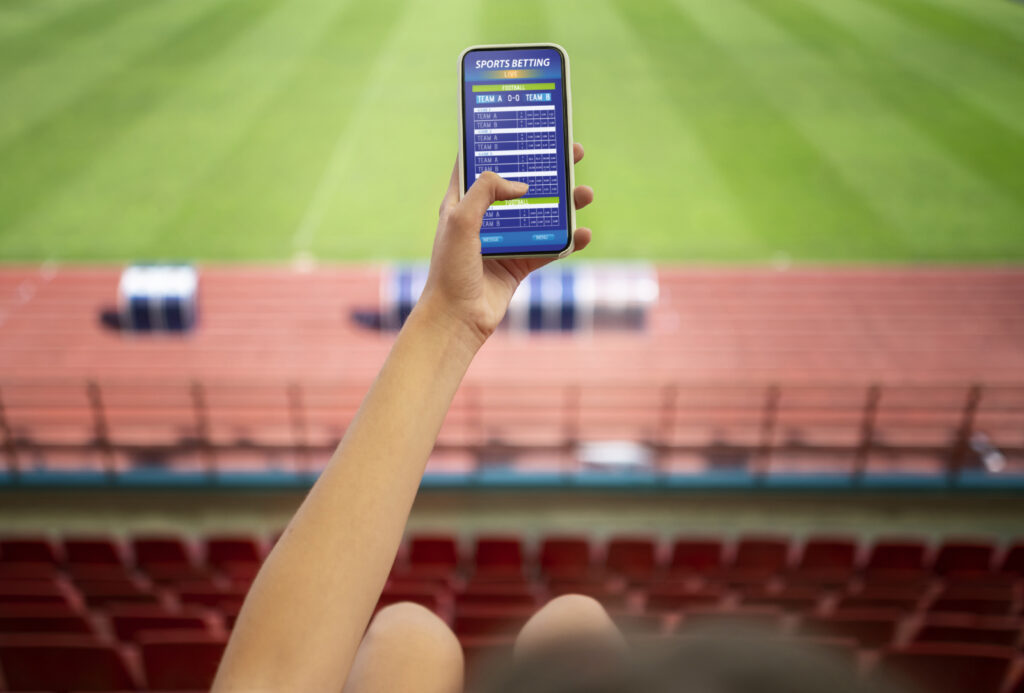
Why the Term Best Cricket ID Provider India Requires Caution
Search results for the best cricket ID provider India may contain advertisements, promotional pages, rankings, reviews, and affiliate-style content.
A “best” label does not establish that a provider is legitimate, authorised, or legally permitted.
A ranking may be influenced by advertising, affiliate arrangements, editorial preferences, or user-generated content. Therefore, do not use a search position or promotional ranking as your main verification method.
Instead, ask practical questions:
- Who operates the service?
- Can the organisation be independently verified?
- Are its policies clearly available?
- Can its claims be confirmed through reliable sources?
- Does it make unsupported claims about legality?
- How does it handle complaints?
- Does it request unnecessary personal or financial information?
- What does current Indian law say about the relevant activity?
These questions provide more useful information than a simple “top provider” label.
Understand the Risks of a Trusted Cricket ID Service
The phrase trusted cricket ID service can appear in advertisements, social media posts, websites, and private messages. However, the use of the word “trusted” is itself only a marketing claim unless supported by verifiable evidence.
Before trusting such a service, examine:
- Ownership information
- Website history and domain details
- Contact information
- Terms and conditions
- Privacy practices
- Complaint procedures
- Independent reviews
- Payment instructions
- Security practices
- Applicable laws and regulations
Do not assume that a provider is safe because several people recommend it online.
Reviews can be manipulated, copied, outdated, or difficult to verify. Treat them as research clues rather than definitive evidence.
Watch for Cricket Betting ID Scam Warning Signs
The term cricket betting ID is commonly used in online searches involving betting-related accounts. This makes it particularly important to distinguish genuine information from impersonation, phishing, and fraudulent payment requests.
Common warning signs include:
Guaranteed winnings
Claims that you will definitely win or cannot lose should be treated as a major warning sign.
Urgent payment requests
Be cautious when someone says you must deposit immediately to activate an account or avoid losing access.
Personal payment accounts
Do not assume that a payment request is legitimate simply because someone claims to represent a company.
Requests for OTPs
Never provide an OTP, UPI PIN, card CVV, banking password, or similar security credential to an unknown representative.
Unofficial applications
Be careful when someone sends an APK or software file and asks you to install it from an unknown source.
Fake support accounts
Scammers can create social media or messaging accounts that imitate customer support representatives.
Unsupported legal claims
Statements such as “government approved,” “fully legal,” or “officially authorised” should be independently verified.
Refusal to provide written information
If a provider avoids explaining its terms, fees, restrictions, privacy practices, or complaint process, treat that as a warning sign.
How to Verify an Online Cricket ID Website
If you find an online cricket ID website, do not immediately register, download software, or transfer money.
Instead, follow a verification-first process.
Step 1: Record the exact domain
Write down the complete website address. Check for spelling variations, extra characters, unusual domain extensions, or redirects.
Step 2: Research the operator
Find out who owns or operates the website. Search for that organisation independently rather than relying only on information published on the website.
Step 3: Read the policies
Review the terms, privacy policy, dispute process, and other relevant information.
Step 4: Verify major claims
If the website claims to have a license, government approval, certification, or other official status, check the relevant government or regulatory source.
Step 5: Search for complaints
Look for independent reports concerning fraud, blocked payments, impersonation, phishing, identity misuse, or other suspicious activity.
Step 6: Verify communication channels
Do not assume that a WhatsApp number, Telegram username, or social media account is official. Confirm it through an independently verified source.
Step 7: Stop when something does not add up
You are not required to continue just because someone has already contacted you or because you have spent time researching the service.
Never Share These Sensitive Details Casually
One of the biggest risks when dealing with an unfamiliar online service is exposing information that could be used for account takeover or financial fraud.
Never casually provide:
- Passwords
- OTPs
- UPI PINs
- ATM PINs
- Card CVV numbers
- Banking login credentials
- Recovery codes
- Remote-access codes
- Unnecessary identity documents
If someone asks for identity documents, first establish why the information is required, who will receive it, how it will be stored, and whether the request can be independently verified.
Do not send sensitive documents to an unknown WhatsApp or Telegram account merely because the person claims to be an agent.
Be Careful With Social Media Provider Profiles
Social media can make it easy for fraudulent accounts to imitate businesses.
Before trusting a profile, check:
- When the account was created.
- Whether its history appears consistent.
- Whether the username contains spelling variations.
- Whether the profile links to the correct official domain.
- Whether contact information matches independently verified information.
- Whether other sources confirm that the account belongs to the organization.
A verified-looking logo, follower count, or professional profile design does not establish that an account is authorized.
What If You Have Already Sent Money?
If you believe you have been scammed, act quickly.
The Government of India’s National Cyber Crime Reporting Portal allows people to report cybercrime and financial fraud. The national cybercrime helpline is 1930. The official portal also allows reporting of suspicious identifiers such as websites, phone numbers, email addresses, and social media URLs.
You should also:
- Contact your bank or payment provider immediately.
- Ask whether the transaction can be stopped or disputed.
- Save screenshots and transaction records.
- Preserve messages, phone numbers, URLs, and payment details.
- Change passwords if you believe your credentials were exposed.
- Enable additional security measures where available.
- Report the incident through the official cybercrime reporting system.
- Do not send additional money to someone promising to recover your funds.
Keep transaction IDs, dates, amounts, screenshots, and communication records available when making a report.

How to Compare Genuine and Suspicious Providers
| Verification Area | More Reassuring Signal | Warning Sign |
| Business identity | Clear and independently verifiable | Anonymous operator |
| Domain | Correct and consistent | Lookalike or frequently changing domain |
| Contact details | Multiple consistent channels | Only a messaging-app account |
| Terms | Clearly available | Missing or vague |
| Privacy policy | Explains data practices | No privacy information |
| Complaints | Clear grievance process | No identifiable process |
| Payments | Transparent information | Unrelated personal accounts |
| Reviews | Independent and varied | Only perfect testimonials |
| Claims | Specific and verifiable | Guaranteed outcomes |
| Security | No unnecessary credential requests | Requests for OTPs or passwords |
| Legal claims | Supported by official sources | Unsupported “approved” claims |
This table should be used as a checklist, not as a certification system. A provider matching several positive signals still requires independent verification.
Check the Current Indian Legal Position
Online gaming and real-money gaming laws in India have undergone significant changes. You should therefore avoid relying on old articles, social media posts, or statements from individual agents when determining whether a particular activity is permitted.
The Promotion and Regulation of Online Gaming Act, 2025 contains provisions concerning online money games, online money gaming services, advertising of such games, and related financial transactions. The Act defines an online money game broadly around payment, deposits, or stakes made with the expectation of monetary or other enrichment.
Because the legal framework can change, check the latest information published by the relevant Indian government authorities before taking any action involving real money.
A provider’s own statement that its service is “legal” or “government approved” should not be treated as independent proof.
Quick Checklist Before You Trust a Provider
Before interacting with any provider, ask:
Website
- Is the domain spelled correctly?
- Is the website operator clearly identified?
- Are terms and privacy policies available?
Identity
- Can the operator be verified independently?
- Do its contact details match across different sources?
Money
- Is anyone asking you to make an immediate payment?
- Are you being asked to send money to a personal account?
- Are guaranteed results being promised?
Security
- Are you being asked for an OTP or password?
- Are you being asked to install an unknown application?
- Are unnecessary identity documents being requested?
Reputation
- Are reviews independent?
- Can complaints or warnings be found elsewhere?
- Does the provider respond transparently to negative reports?
Legal status
- Have you checked the latest applicable Indian laws?
- Are claims about licences or government approval independently verified?
If you cannot verify important information, do not treat the provider as trustworthy simply because its website looks professional.
Frequently Asked Questions
Check the website domain, operator identity, contact details, policies, independent reputation, payment information, security practices, and applicable legal requirements. Do not rely on a single signal.
Common warning signs include anonymous ownership, lookalike domains, guaranteed winnings, urgent payment demands, personal-account payment requests, unofficial software downloads, and requests for passwords or OTPs.
No. HTTPS helps encrypt communication between your browser and the website, but it does not verify the identity or legitimacy of the website operator.
Not automatically. Reviews can provide useful research leads, but they should be considered alongside independent business information, complaints, security practices, and legal information.
Stop communicating with the suspected party, contact your bank or payment provider if money was transferred, preserve evidence, and report suspected cyber financial fraud through India’s official cybercrime reporting channels. The national helpline is 1930.
A website can make such a claim, but the claim should be independently verified against current legislation and official government information. A provider’s statement alone does not establish legality.
Conclusion
Identifying a genuine Cricket ID Provider in India requires independent research rather than relying on rankings, testimonials, social media claims, or promotional messages. Check the website, operator identity, policies, payment practices, security requests, reputation, and current legal framework before making any decision.
The same verification principles apply when researching Fairplay S7 or any other online brand. A familiar name, professional website, or positive review does not by itself establish legal status, authorisation, or financial safety.
Indian online gaming regulations have changed significantly, so always check current information from authoritative government sources before engaging with any real-money gaming activity. If you encounter suspicious payment requests, phishing attempts, or suspected fraud, preserve the evidence and use the appropriate official reporting channels.